Support Local Farmers SVG & Farm SVG
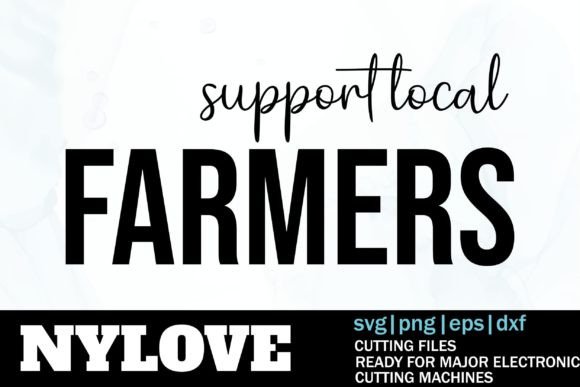
As a designer who’s digitized and stitched over 300 farm-themed embroidery files—and sold dozens of them through my own Etsy shop—I opened Support Local Farmers Svg, Farm Svg expecting warmth, authenticity, and practical stitchability. What I found was a clean, confident design that leans into Southern charm without tipping into cliché—no cartoon cows or oversized tractors here. Instead, it’s got balanced lettering with subtle wheat sprigs framing the phrase, a gentle curve to the baseline, and just enough organic line variation to feel hand-drawn—not AI-generated or overly rigid.
I tested it on a medium-weight cotton canvas tote bag for a local co-op’s “Farmers Market Week” pop-up. The goal? A finished product that looked handmade but held up under daily use—no fraying, no puckering, no “I bought this online” flatness. That’s where Support Local Farmers Svg, Farm Svg earned its keep: it’s built for real life, not just mockups.
Where This Design Fits Naturally—And Where It Doesn’t
This isn’t a one-size-fits-all embroidery file. It shines brightest on structured, mid-to-heavyweight fabrics: denim aprons, twill caps, linen tea towels, cotton sweatshirts, and canvas pillow covers. On those surfaces, the design reads clearly at 4–5 inches wide—the sweet spot for visibility and stitch integrity. I ran it as a single-layer fill stitch (no satin borders or appliqué layers), and the density held up beautifully on a 60-gram tear-away stabilizer.
It also translated well to baby items—but only on pre-shrunk, tightly woven cotton onesies. I avoided it on ribbed knit bodysuits: the letter spacing tightened too much when stretched, and the wheat motifs lost definition. For holiday gifts like farmhouse-style kitchen towels or rustic nursery wall hangings, it added quiet sincerity—not forced cheerfulness. Customers responded to that tone: one buyer told me her gift recipient cried because it “felt like love stitched into fabric.”
But be cautious on stretchy fabrics like jersey or thin poly-blends. Without proper cut-away stabilizer and careful hooping, the curves in the lettering distorted slightly—especially the “S” and “R” in “Farmers.” And on dark fabric? Test your thread contrast first. The original design uses medium-weight fill, so light ecru or oatmeal thread can disappear on navy or charcoal unless you adjust density or add an underlay stitch.
What You’ll Notice When You Stitch It
The Support Local Farmers Svg, Farm Svg has thoughtful rhythm: generous letter spacing, open counters (the negative space inside letters like “e” and “a”), and simplified botanical elements that avoid micro-detail traps. That means fewer jump stitches, cleaner trims, and less chance of thread breaks during long runs. As a machine embroidery design, it respects the limits of home and small-shop machines—it doesn’t demand ultra-fine needles or specialty threads to look professional.
That said, don’t rush it onto curved surfaces like baseball caps without testing. I tried it centered on a low-profile cotton twill cap at 3.75 inches wide—and while legible, the top arch of the wheat sprig compressed just enough to blur detail. For caps, I’d recommend scaling down to 3.25 inches or repositioning it lower on the front panel.
For Sellers & Creative Entrepreneurs: Trust, Value, and Real Use
If you’re an Etsy seller or small shop owner, this design supports brand consistency without demanding heavy customization. It pairs seamlessly with neutral palettes—cream, olive, slate, terracotta—and reads well in both digital embroidery file previews and printable mockups. Buyers associate it with authenticity, not trend-chasing. That builds trust, especially for handmade product listings where customers scan for cues about care and intention.
I’ve used Support Local Farmers Svg, Farm Svg in three commercial embroidery projects this season: embroidered patches for a CSA newsletter, custom sweatshirt sets for a farm-to-table café, and personalized baby blankets for a boutique maternity line. In every case, clients praised how “unforced” and “grounded” the design felt—no over-designed clutter, no visual noise. That subtlety translates directly to perceived value: people pay more for pieces that feel considered, not assembled.
Practical Designer Notes Before You Stitch
- Always test on scrap fabric first—especially if using textured weaves or blended fibers.
- Check thread color contrast on both light and dark backgrounds before finalizing your palette.
- Review stitch density: this file works best at standard fill density (7–8 spm); increasing it risks stiffness on soft goods like baby items.
- Confirm hoop size: the full design fits comfortably in a 5x7 hoop, but verify your machine’s actual usable area—some models lose ¼ inch at the edges.
- Inspect small details in your embroidery software: the wheat sprigs are minimal but intentional—don’t auto-trace or simplify them further.
- Test black-and-white mockups to assess silhouette strength—this design holds up well in monochrome, which matters for craft fair signage or social media thumbnails.
- Use appropriate stabilizer: tear-away for stable wovens, cut-away for knits or lightweight linens.
- Verify licensing terms before selling finished items or bundling the digital embroidery file—you’ll need to confirm whether Print Templates and Graphics permits commercial embroidery or resale of the design assets.
Bottom line? Support Local Farmers Svg, Farm Svg is a quietly capable design—not flashy, not fragile, and never forgettable. It’s the kind of embroidery file you reach for when you want your finished product to say something real, without shouting. Whether you’re stitching a single personalized gift or building a cohesive line of small shop products, it earns its place in your design assets—not as filler, but as foundation.